Why Overhead Doors?
You have three realistic choices for a shed door wide enough to fit a snowmobile. Here's why overhead (roll-up or sectional) wins for most builds.
| Feature | Overhead (Sectional) | Roll-Up (Coiling) | Swing-Out (Barn) | Sliding (Barn) |
|---|---|---|---|---|
| Clear opening width | Full width | Full width | Full minus hinges | ~90% of track |
| Snow clearance | Excellent — opens up | Excellent | Must clear entire swing arc | Track clogs with ice |
| Side clearance needed | None | None | Full door width | Half door width |
| Ceiling headroom needed | ~12–14" above opening | ~8–10" | None | None |
| Wind resistance | Strong when closed | Strong | Can catch wind | Moderate |
| Insulation options | Insulated panels avail. | Limited | Easy to insulate | Gaps at edges |
| Cost (8×7 door) | $400–$900 | $500–$1,200 | $200–$500 | $250–$600 |
| DIY install difficulty | Moderate | Moderate | Easy | Easy |
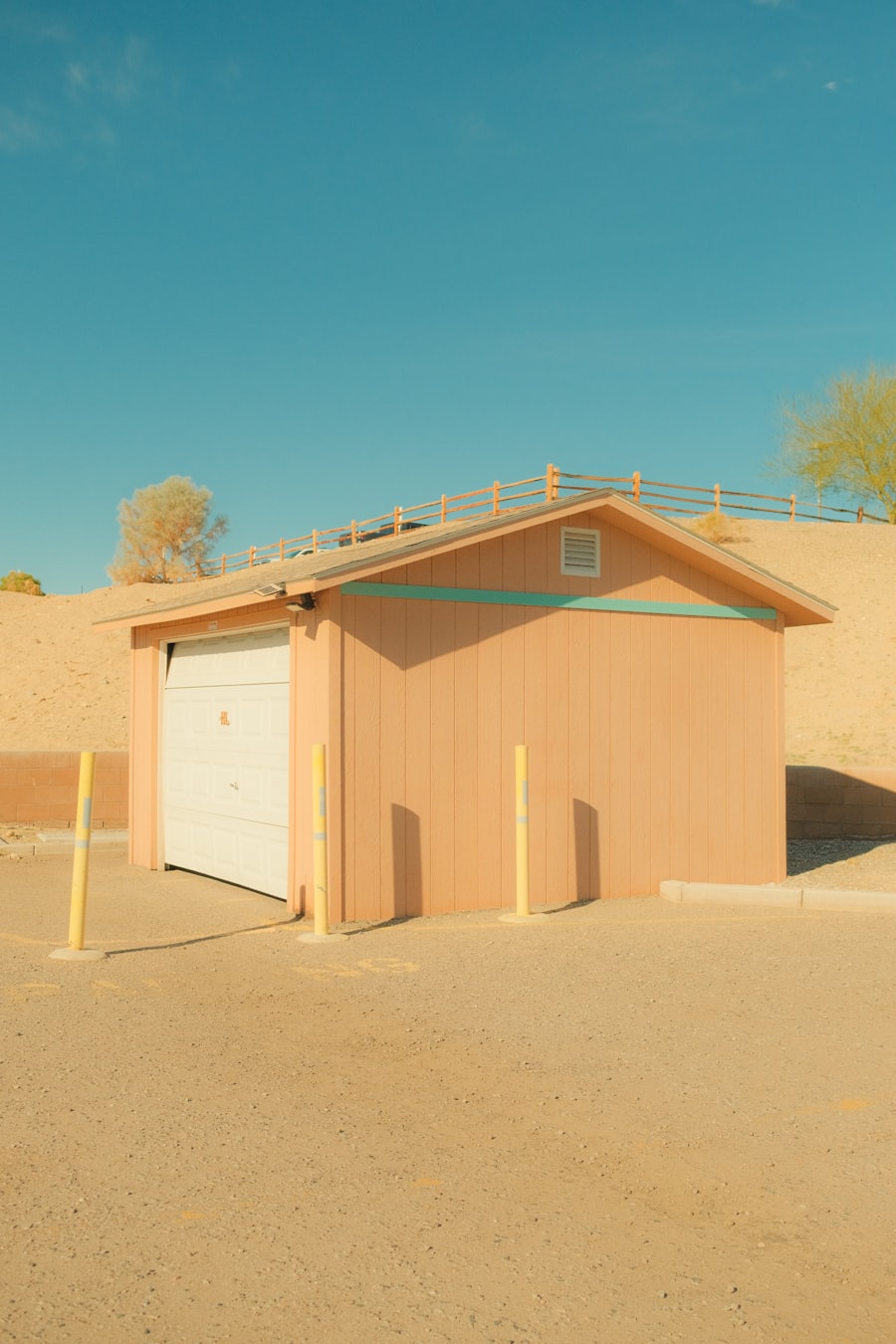
Overhead doors are the default for snowmobile sheds because they don't need side clearance (critical on tight lots), they don't fight snow or wind, and they seal well. In a cold climate where you're accessing a small building in winter, these factors matter more than saving $200 on a barn door.
Sectional vs. Roll-Up — What's the Difference?
Sectional overhead doors are what you see on most residential garages: 4–5 horizontal panels connected by hinges, riding in vertical tracks with a curved section near the ceiling. These are the most common, most insulation-friendly, and easiest to source in standard sizes. Brands like Clopay, Amarr, and Wayne Dalton all make them.
Roll-up (coiling) doors are a single curtain of interlocking steel slats that winds onto a drum above the opening. They take less headroom, but they're thinner, harder to insulate, and noisier. They're ideal when ceiling clearance is extremely tight (like a 7-foot wall height) or you want a more commercial/utilitarian look.
For most DIY snowmobile sheds, a standard sectional overhead door is the better call. They're cheaper, more available, better insulated, and your local garage door installer already knows how to put one in.
Sizing Your Shed
Snowmobiles are bigger than people think. A modern trail sled is about 48" wide and 120–130" long. A mountain sled or crossover can hit 135"+. You need room to walk around them, store gear, and work.
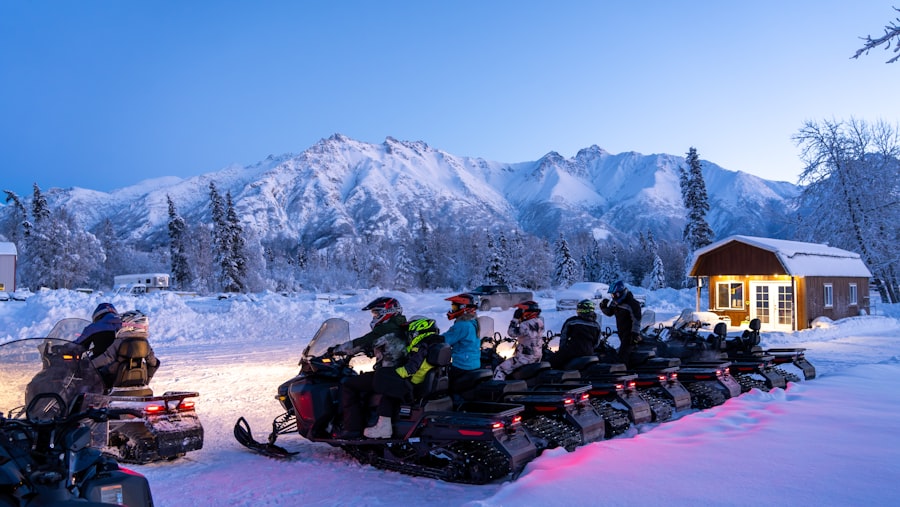
Don't guess. Put a tape on your actual sleds — with the skis straight and track on the ground. Add 12" per side for walking room and 18" between machines. Then check your local building code: many jurisdictions don't require a permit for structures under 120–200 sq ft (varies widely — always verify).
Height Matters Too
Wall height is often overlooked. An 8-foot wall is the sweet spot: it gives you room for a 7-foot overhead door with enough headroom above for the track radius and springs. Going shorter (like a 7-foot wall) can work with a roll-up door, but makes the space feel cramped and limits the door options dramatically. If your roof pitch is steep enough, you can also gain usable overhead loft storage for gear bags, covers, and off-season equipment.
Overhead Door Specs
Getting the door right is the most important decision in this whole build. Too narrow and you'll scrape your sled. Too small and you'll hate using it every single time.
Recommended Door Sizes
| Door Width | Height | Best For | Notes |
|---|---|---|---|
| 8' (96") | 7' | 1 sled, nose-in | Most common shed door size. Tight for a sled on a dolly — fine if you're driving in under power. |
| 9' (108") | 7' | 1 sled with margin | More comfortable. Room to walk alongside. Good for wider sleds or if you use a tow dolly. |
| 10' (120") | 7'–8' | 2 sleds side-by-side | Two standard sleds (48" each) = 96" + room. Requires a 12'+ wide shed. |
| 12' (144") | 7'–8' | 2 sleds comfortably / trailer | Can back a single-place trailer straight in. Very forgiving width. Needs a 14'+ building. |
Key Door Features to Look For
R-6 to R-12 polyurethane-filled panels are available in most residential overhead doors. Worth it if you care about keeping the space above freezing. Adds ~$150–$300 to door cost.
Torsion springs (mounted above the door) are safer, longer-lasting, and allow lower headroom. Extension springs (on the sides) are cheaper but have a shorter lifespan and require safety cables.
Most overhead doors come with a basic slide lock. Upgrade to a keyed lock or add a hasp on the inside. If you're adding an opener, the opener itself acts as a lock when engaged.
If you're in an area with high winds, look for doors with wind-load reinforcement. Struts bolt across the back of panels to prevent bowing. Important for wider doors (10'+).
Opener: Worth It?
For a snowmobile shed, a garage door opener is a legitimate quality-of-life upgrade. You're often accessing the shed in the dark, in the cold, with gloves on. A basic chain-drive or belt-drive opener runs $150–$300 and lets you open the door from your truck or with a keypad. Belt-drive is quieter but costs more. A wall-mount (jackshaft) opener is ideal for sheds with low ceilings since it mounts beside the door instead of overhead — but they're pricier ($250–$500).
If you don't have power to the shed, manual operation is fine. A well-balanced door with good springs opens with one hand.
Materials & Construction
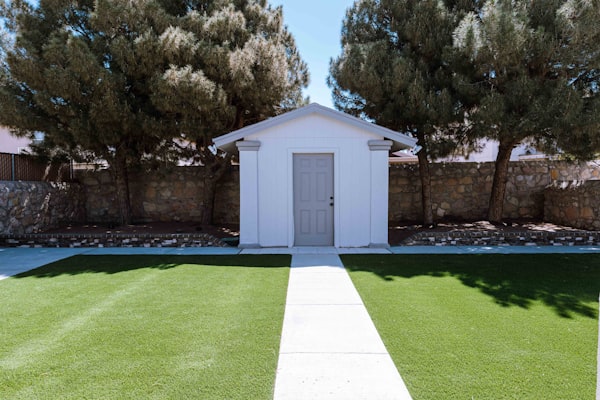
The structure itself is usually wood-framed, steel-framed, or a prefab panel system. Here's what actually matters for a snowmobile shed.


| Material | Pros | Cons | Cost/sqft |
|---|---|---|---|
| Wood Frame + Steel Siding | Strong, easy to insulate, familiar to build, handles door weight well | Requires foundation prep, can rot if not detailed properly | $12–$22 |
| All-Steel (Pole Barn) | Fast to erect, low maintenance, no rot, fire resistant | Condensation issues without insulation, can dent | $10–$18 |
| Wood Frame + Wood Siding | Looks great, blends with residential, easy to customize | Needs paint/stain maintenance, higher material cost | $15–$28 |
| Prefab Vinyl/LP Panel | Delivered assembled or in panels, zero maintenance exterior | Harder to modify, less structural flexibility for large doors | $18–$35 |
Framing Considerations for Overhead Doors
The door header is the most critical structural element. An 8-foot door opening needs a header that can carry the weight of the door track, springs, and (if applicable) opener without sagging. For wood framing:
- 8' opening: Double 2×10 or LVL beam — minimum
- 10' opening: Double 2×12 or engineered header
- 12' opening: LVL or steel beam strongly recommended
Also ensure the jambs (vertical framing on each side of the door) are plumb, level, and securely connected to the foundation. The overhead track brackets bolt into these — if they flex or shift, the door will bind.
Roof Style
A gable roof (the classic A-shape) is the most common and gives you the most headroom for the door track. Shed-style (single-slope) can work but may limit headroom at the back. A gambrel (barn-style) roof maximizes interior volume if you want overhead loft storage. Minimum recommended pitch for snow country: 6/12 or steeper — snow load is a real consideration and a low-slope roof in a heavy snow area is asking for trouble.
Floor Options
What you park a 500-pound wet snowmobile on matters. Here are the realistic options, ranked.
- Best long-term option
- 4" slab on 4" gravel base
- Handles weight, fluid, moisture
- Easy to clean meltwater/oil
- Slight slope to drain is ideal
- Cost: $4–$8/sqft installed
- Cheapest viable option
- 4–6" compacted ¾" crushed stone
- Natural drainage
- Easy to level and DIY
- Can settle over time under sleds
- Cost: $1–$3/sqft DIY
- Good for prefab/kit sheds
- PT 4×4 skids + ¾" PT plywood
- Elevated = no ground moisture
- Harder to drive a sled onto (ramp)
- Can rot over time with meltwater
- Cost: $5–$10/sqft
Pour your slab with a 1–2% slope toward the door opening (or toward a center drain if you're feeling fancy). When you pull a snow-covered sled inside, the meltwater needs somewhere to go. A dead-flat floor means puddles, ice, and eventually a cracked slab from freeze-thaw cycles. A slight slope toward the door lets gravity do the work.
What About Pavers or Mats?
Interlocking concrete pavers on a gravel base can split the difference between gravel and a full slab — they drain, they're durable, and they look good. Cost is higher ($6–$12/sqft) but no concrete work required. Rubber garage floor mats or tiles are a nice finishing touch on concrete but aren't a substitute for a real floor.
Insulation & Ventilation
Whether you need insulation depends on what "storage" means to you. Most snowmobile sheds don't need to be heated — but some do.
Do You Actually Need Insulation?
Insulate if...
- You'll work on sleds inside (wrenching, repairs)
- You want to keep the space above freezing
- You store fluids that can't freeze (certain lubes, cleaners)
- The shed is attached or close to your house
- You plan to heat the space even occasionally
Skip insulation if...
- It's purely cold storage — park & walk away
- Budget is very tight
- You're using an unheated pole barn style
- The shed is temporary or semi-permanent
- You'll use a portable heater on rare occasions
Insulation Options
| Type | R-Value | Best For | Cost (materials) |
|---|---|---|---|
| Fiberglass batts (2×4 wall) | R-13 | Standard wood-frame walls | $0.50–$1/sqft |
| Fiberglass batts (2×6 wall) | R-19 | Cold climates, heated sheds | $0.70–$1.30/sqft |
| Rigid foam (XPS/EPS) | R-5 per inch | Steel buildings, under siding | $0.80–$1.50/sqft |
| Spray foam (closed-cell) | R-6.5 per inch | Best seal, moisture barrier | $1.50–$3/sqft (pro) |
| Reflective/radiant barrier | Varies | Supplement to other insulation | $0.30–$0.70/sqft |
Ventilation — The Overlooked Factor
Even an unheated shed needs ventilation. Here's why: you drive a hot snowmobile in after a ride, close the door, and leave. The engine heat + melting snow = moisture. That moisture condenses on cold metal (your sled, your tools, the door hardware) and causes rust and corrosion.
At minimum, install:
- Two gable vents — one at each end, sized per code (1 sqft of vent per 150 sqft of floor area)
- A ridge vent if you have a gable roof — passive airflow with no moving parts
- Or a small exhaust fan on a timer or humidistat if you want active ventilation
Never run a snowmobile engine inside a closed shed without massive ventilation. Even "just warming it up" produces lethal CO levels in an enclosed space within minutes. If you need to run the engine, open the door fully and point the exhaust outside. Same goes for fuel-burning heaters — use them only with the door cracked or a CO detector installed.
Heating (If You Go That Route)
For a small insulated shed (100–200 sqft), you don't need much heat. Options in order of practicality:
- Electric space heater (1500W): Cheapest to install, safe with a thermostat, needs power
- Propane wall heater (vent-free or direct-vent): 10K–20K BTU, no electric needed for vent-free, but moisture and CO concerns
- Electric radiant ceiling panels: No floor space, even heat, needs power
- Mini-split heat pump: Overkill for most, but efficient if you're in the shed a lot
Security
Snowmobiles are high-value, portable, and often stored in remote or rural locations. Theft is a real concern.
- Keyed overhead door lock (not just the latch)
- Heavy-duty hasp + padlock on the inside
- No windows (or polycarbonate, not glass)
- Lag-bolt the door track to reinforced framing
- Steel man-door with deadbolt if there's a side entry
- Hitch lock or cable lock on each sled
- Battery or solar-powered trail camera inside
- Door/window contact sensor (wireless)
- Motion-activated light outside the door
- GPS tracker hidden on each sled ($50–$100/yr)
- Cellular alarm (no WiFi needed)
- Smart lock on opener for access logging
The best anti-theft measure for a snowmobile shed is not advertising what's inside. No snowmobile brand stickers on the shed. No windows. Don't leave trailer hitches or ramps visible outside. A plain, boring-looking shed with a good lock is worth more than a tricked-out building with cameras that someone already knows is full of sleds.
Winter Access Considerations
You're building a snowmobile shed — which means you need to access it in exactly the conditions when everything is hardest to access.

Site & Placement
Face the door away from prevailing wind if possible. A door facing into winter storms will drift shut. South-facing doors get more sun, which helps with snow melt but can cause ice at the threshold from refreeze cycles.
Set the shed where you can drive a sled directly to/from the access trail. Every time you have to trailer a sled across your yard to reach the shed, you'll wish you'd thought about this. If you ride from home, trail access should drive the shed location.
Grade the area so water flows away from the door. A frozen puddle at the threshold will freeze your door to the ground. Build up the pad 4–6" above surrounding grade.
Know your local ground snow load (check building code or ASCE 7 maps). A 10×16 shed roof in a 60 psf snow load zone is holding over 4 tons of snow. Design for it — or keep the roof steep enough to shed.
Door-Specific Cold Weather Issues
- Bottom seal: Use a rubber astragal (bottom seal) rated for cold temps. Cheap vinyl seals crack and split in sub-zero weather.
- Track lubrication: Use silicone-based lube, not WD-40 or lithium grease — those get gummy below zero. White lithium can work in moderate cold.
- Spring tension: Springs can feel stiffer in extreme cold. Ensure the door is balanced properly in fall before deep winter hits.
- Threshold ice: A small piece of rubber threshold strip or a heated mat at the base prevents the door from freezing to the concrete.
- Opener battery: If your opener uses a battery backup, cold kills batteries. Keep it on AC power primarily.
If you ride from home, consider grading a packed approach path to the shed door in early season. A slight ramp (2–3" rise over 4 feet) from ground level up to the slab makes it easy to drive a sled straight in. Some people pour a small concrete apron extending 4–6 feet outside the door for this reason — it gives you a clean, ice-free staging area.
DIY vs. Kit vs. Custom
Three ways to get a snowmobile shed. Each has trade-offs.
Option 1: Full DIY
Cost: Lowest — materials only ($2,000–$6,000 for a 10×16)
Time: 2–5 weekends depending on experience and foundation type
Skill needed: Intermediate carpentry. If you've framed a wall before, you can do this.
Biggest challenge: Getting the door opening square and the header sized right. Everything else is basic shed framing.
Foundation & Floor
Pour a slab or prepare a gravel pad. Set it level. This is the step people rush and regret.
Frame Walls
2×4 or 2×6 walls, 16" OC. Build the door wall with the correct rough opening (door width + 3" each side, door height + 1.5"). Size the header for your span.
Raise Walls & Build Roof
Tilt up walls, plumb and brace, add top plates. Frame roof with trusses (pre-built is easiest) or rafters. Sheathe and shingle.
Siding & Trim
Install siding, door trim, and any flashing. Metal siding is fastest. Prime and paint any wood.
Install Overhead Door
Mount the track, hang the sections, install springs, and adjust. Follow the manufacturer's instructions carefully — spring tension can be dangerous.
Finish: Insulate, Wire, Accessorize
Add insulation if desired, run electric if applicable, mount lights, shelving, hooks.
Option 2: Prefab Kit Shed
Cost: $3,500–$10,000+ for a 10×16 with door
Time: 1–2 weekends (assembly), plus foundation prep
Skill needed: Basic — if you can follow instructions and use a drill
Best brands: Best Barns, Heartland, Arrow (steel), ShelterLogic (fabric — don't), local Amish builders
Key: make sure the kit includes or accommodates an overhead door. Many shed kits are designed for swing doors only, and retrofitting an overhead door into a kit shed is a pain — the headers often aren't strong enough. Look for kits specifically marketed for "garage" use or verify the header specs before buying.
Option 3: Custom / Contractor-Built
Cost: $8,000–$20,000+ for a 10×16 (huge regional variation)
Time: 3–10 days on-site, but you do nothing
Best for: Permitting headaches, complex sites, heated/insulated builds, or if your time is worth more than your money
A local general contractor or shed builder can handle everything including permits, foundation, and the door install. Get 3 quotes. Specify that you want an overhead door — some shed builders default to barn doors and will charge extra to switch.
Comparison At a Glance
| Factor | Full DIY | Kit | Custom Built |
|---|---|---|---|
| Cost (10×16) | $2K–$6K | $3.5K–$10K | $8K–$20K |
| Time investment | High | Medium | Low |
| Customization | Total | Limited | Total |
| Skill required | Intermediate+ | Basic | None |
| Permit handling | You | You | Usually them |
| Resale value | Varies | Moderate | Highest |
Approximate Costs
Real-world cost ranges for a 10×16 (160 sqft) shed with an overhead door, as of 2024–2025. Prices vary significantly by region, material costs, and whether you're in a rural area or suburban HOA territory.
Component Breakdown (DIY Materials)
Total Ranges by Approach
$2,000–$4,000
Gravel floor, basic framing, steel siding, non-insulated door, no electric. Functional and cheap. Gets the job done.
$4,000–$8,000
Concrete slab, insulated door, basic electrical, fiberglass insulation, painted LP siding. The sweet spot for most builders.
$4,500–$12,000
All-inclusive kit + your foundation + your labor to assemble. Wide price range based on brand, material, and features.
$8,000–$20,000+
Turnkey: foundation, build, door, electric, insulation, everything. You write checks and they build a shed. Highest quality potential.
Planning Checklist
Before you buy a single board or call a contractor, work through this list.
Permits & Codes
- Check if a permit is required (size threshold varies)
- Verify setback requirements from property lines
- Check HOA restrictions if applicable
- Look up local ground snow load
- Confirm wind speed zone for door rating
Design Decisions
- How many sleds? (sizes measured)
- Shed footprint chosen
- Door size selected
- Foundation type decided
- Insulated or uninsulated?
- Electrical needed?
- Opener or manual door?
Site Prep
- Location chosen (trail access, wind direction)
- Ground graded and leveled
- Drainage planned
- Utilities located (call 811)
- Foundation materials ordered
Major Purchases
- Overhead door ordered (lead time: 1–4 weeks)
- Lumber/steel priced and sourced
- Trusses ordered (if pre-built)
- Concrete scheduled (if slab)
- Siding and roofing materials
- Opener + hardware
Build in late summer or early fall. You want the foundation cured and the structure weather-tight before the ground freezes. Ordering the overhead door early is critical — popular sizes can have 2–4 week lead times, and that stretches longer in peak building season. Don't be the person frantically trying to finish a shed in November with snow in the forecast.